Been telling friends about this writing exercise from Tristine Rainer’s book, Your Life as Story: Writing the New Autobiography, but the exercise was actually put together by another author and memoir-writing teacher, Deena Metzger, along with a student in one of her classes. In 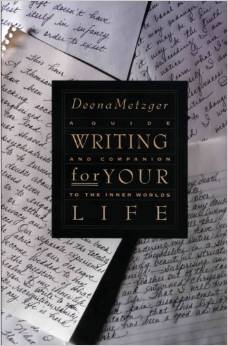 Writing for Your Life, Metzger recounts how this student had had such a barren upbringing (father dead, mother an alcoholic), that she felt she had no history, nothing to write about. Metzger suggested she write about an aunt of hers, an artist who lived in Manhattan, imagining whatever she didn’t know (which was nearly everything). Instead of simply making a portrait of her aunt, the student ended up writing an entire imaginary history, in which the aunt became her friend and mentor, and took her to live with her in NYC. According to Metzger, the student writer was transformed; she had changed how she felt in the present by creating a new past for herself.
Category Archives: Books & Movies
Imagining hope, the books
 Both Ursula Le Guin and Diana Wynne Jones have said that “writers of the imagination” can inspire hope as they imagine alternatives to destruction and despair…Marina Warner said something similar in From the Beast to the Blonde: On Fairy Tales and Their Tellers, and probably so have plenty of other people. In honor of the sun moving into Sagittarius, the sign of optimism, what follows is a short, random list of hope-inspiring books and/or worlds, that offer alternative solutions to a number of things:
Ursula Le Guin, The Dispossessed, The Lathe of Heaven, Always Coming Home, The Telling, Tehanu, Dancing on the Edge of the World, etc. (science fiction and literary criticism)
Diana Wynne Jones, Howl’s Moving Castle, Fire and Hemlock, Black Maria, The Dalemark Quartet, long story short, pretty much everything (fantasy)
Stanley Cavell, Pursuits of Happiness: The Hollywood Comedy of Remarriage (essays about the classic romantic comedies — mostly starring Cary Grant, often with Katharine Hepburn.)
Lewis Hyde, The Gift: Imagination and the Erotic Life of Property (using anthropology, literary criticism, fairytales, and the kitchen sink, Hyde looks at what it means to be an artist, healer, teacher, or anyone else whose work is based on the gift, living in a money economy.)
Isabel Allende, Eva Luna (magical realism, the story of a girl who is born a servant and becomes a writer)
Peter Kropotkin, Mutual Aid (written in 1902, a scientist’s alternative to social Darwinism)
Emma Goldman, Living My Life (“If I can’t dance I don’t want to be in your revolution.”)(autobiography of an anarchist)
Terry Pratchett, Nation, Going Postal, A Monstrous Regiment, Witches Abroad, A Hat Full of Sky, etc., etc. (fantasy)
Matthew Fox, The Reinvention of Work: A New Vision of Livelihood for Our Time (essays about work with heart)
Carolyn See, The Handyman, Golden Days, There Will Never Be Another You (fiction: in which many of her protagonists fight despair with hoping outside the box)
Marion Milner, A Life of One’s Own (the journal of a pioneer of lucid dreaming in 1920s London)
Kim Stanley Robinson, Lucky Strike (science fiction novella; alternate history of Hiroshima and the atom bomb)
Starhawk, Dreaming the Dark (essays) and The Fifth Sacred Thing (fantasy, a future California where San Francisco is run by little old ladies and Wiccans; L.A. is the evil empire where those who own the water run everything)
Nancy Farmer, A Girl Named Disaster, The House of the Scorpion (fantasy and science fiction: an 11-year old girl in Mozambique runs away from an arranged marriage, survives with the help of animals and spirits; the early life of the boy who is a clone of a 140-year old drug lord in a land called Opium, in what is now Arizona)
Francisco X. Stork, Marcelo and the Real World (fiction: Marcelo lives in a treehouse behind his family’s home; he hears inner music and is happiest working with the Haflinger ponies at his special school; what happens when his father puts him to work at his corporate law office for the summer so he can get some experience in the real world.)
Ruth Ozeki, A Tale for the Time Being (fiction: a Japanese-American girl named Nao is the time being; so is the woman named Ruth who reads Nao’s diary when she finds it on a beach in Vancouver; so is Nao’s great-grandmother, a Buddhist nun)
Robertson Davies, Fifth Business, World of Wonders (fiction: see earlier post)
Dorothy Sayers, Gaudy Night (mystery featuring Lord Peter Wimsey: set in a fictional women’s college at Oxford in 1935, the theme is women’s education, equality between sexes, and the course of true love)
Mikhail Bulgakov, The Master and Margarita (fiction, or a very strange roman a clef: the Devil comes to 1920s Moscow — where no one believes in him — except a woman named Margarita and a nameless writer who was driven crazy when his novel about Pontius Pilate was ridiculed by the powers that be. This book was banned in the USSR for 30 years, censored for even longer, and Bulgakov officially known as “a slanderer of Soviet reality”.)
Doris Lessing, The Four-gated City, particularly the appendix, where she veers into an s.f. future (fiction, the fifth novel in her Martha Quest series, roman a clef)
Sheri Tepper, The Margarets, Gibbon’s Decline and Fall, The Fresco, The Family Tree, Beauty etc. etc. (science fiction and fantasy, focused on gender and environmental issues, funny and sometimes sad)
Eleanor Arnason, Changing Women (science fiction: a group of anthropologists from a reclaimed earth land on a planet inhabited by matriarchal ‘fur-people’)
Books into Movies: Pride and Prejudice, part II
 The beauty of the updating in the 2005 film version of Jane Austen’s Pride and Prejudice is that emotion, feelings, or what Austen called sensibility have a say in the story; so the film is less of a satire than the book, and it is also kinder. I think this is the only version of Pride & Prejudice where Mrs. Bennet gets to be more than an empty-headed and uncouth comic turn. In this film, her preoccupation with marrying off her girls is her way of trying to do her best for them; and in this particular she is more practical and rational than her two eldest daughters. Her euphoric silliness at Bingley’s ball, where she drinks too much, tells everyone that Jane is soon to marry Bingley, flips sherbet on another guest, apologizes profusely, and sings to herself, is more endearing than appalling.
And Mr. Bennett calls her “Blossom”! (As if he likes her!) He does laugh at her ‘nerves’, but with a tenderness that redeems his relationship to her, which in the book and every other film version is coolly critical, although ‘humorous’. (Which only means he’s laughing at her, and we can too.) Donald Sutherland’s Mr. Bennet and Brenda Blethyn’s Mrs. Bennet, by the addition of a few words, one scene, a change in the way they speak the dialogue from the book, and eloquent body language, shift Austen’s portrayal of a miserable marriage to one that is founded on affection, despite the couple’s differences in values and temperament.
Throughout the movie, we feel sympathy instead of contempt for other less-than-perfect characters – for Mary, the plain sister, who tries so hard to be accomplished as a musician, even though she is tone-deaf. The scene at the ball where Mr. Bennet has to ask her to give others a turn at the piano has an add-on, where he hugs her and tries to comfort her as she weeps and says, “But I practiced all week! I hate balls.” Even the bumptious Mr. Collins has his moment of wistfulness, showing that a pompous buffoon has dreams, too.
The other part of getting the feelings in, besides feeling sympathy for characters who were only ridiculous before, is that for once Mr. Wickham is believable as someone who could con a young woman as supposedly astute as Lizzy. In Rupert Friend’s portrayal, Wickham comes across as disarming instead of smarmy. His comment (another change from the book) that he is ‘unimportant’ and has no taste in ribbons but will buy some for Lydia, is in striking contrast to Darcy’s stiff self-importance; and Lizzy’s preference for Wickham finally makes sense. Even the viewer who knows better likes him. But what also works (another addition) is his violence near the end, when his new wife Lydia is standing in the carriage, waving goodbye to her family and simpering, and he jerks on her arm and orders her to sit down. It is only a moment seen through wavy glass; but it is a chilling glimpse of Lydia’s future with a con man who has been trapped into marrying her.
Last but not least: the best bit of getting the feelings in, is the way Lizzy and Darcy interact throughout the film. The scene when he proposes and she turns him down is different from the book or any film version. The same words are spoken with such intensity that you believe in Darcy as a passionate man, and in Lizzy as a woman who is attracted in spite of herself, which makes her subsequent upset more understandable. (That they are soaking wet from being caught in a rainstorm is another inspired addition.) And the way they finally get together is masterful. Instead of the randomness of them being left alone together while walking to town, and having a stilted conversation in which they sort out what is really going on between them, the two meet at dawn on a bridge, as if pulled there by the magnetism of their shared attraction. The paucity of conversation at this point in the book is no problem here; the viewer doesn’t need long explanations to finally believe that Lizzy is in love, too, and that this story really is a love story.
Books into Movies: Pride and Prejudice, part I
I’ve read Pride and Prejudice so often I know it too well to read anymore. I’ve seen all of the PBS adaptations (more than twice), because they kept to the original dialogue and included every bit of the story – they treated the book as holy writ instead of idiotizing it, like the 1940s version where Greer Garson says to Laurence Olivier, “You’re so proud!” and he replies, “You’re so prejudiced!” Although my cousin (who is the real Austen fan; she understands satire) loved the Colin Firth-as-Darcy version, where he goes into a pond fully clothed and comes out with his white shirt soaking wet and clinging to him (yowza), I wasn’t entirely convinced by the updated, passionate Darcy. But maybe that bit of updating prepared me for the 2005 film version that changes and rearranges the book, moving dialogue from one chapter to another, and even from one character’s mouth to another’s. I nearly didn’t go see it because I was so sure Keira Knightley would bomb out (an anorexic, square-jawed Lizzy? Nah.). But the whole ensemble cast was brilliant, and screenwriter Deborah Mogguch (and Emma Thompson, who wrote additional dialogue) added bits to the movie that finally ‘fixed’ the problems I’d always had with the book.
And I still don’t want to say the movie was better, because the movie wouldn’t exist without the book, without those characters and their story being brought to life in print first. But the movie was the best-ever adaptation, and satisfying in a way the book was not.
Pride and Prejudice with Keira Knightley and Matthew Macfayden, screenplay by Deborah Mogguch, with additional dialogue by Emma Thompson.
Jane Austen wrote Pride and Prejudice when she was 21, which is maybe why she seems to want to make Elizabeth Bennet a somewhat idealized character. At the first ball Austen presents Elizabeth as a romantic – Lizzy tells her friend Charlotte that she will only marry for love, even though in this society a ‘good’ marriage (to a man of her own class or higher, with enough money to support a wife who has none) is what she must aim for. Lizzy is supposed to be only slightly interested in a wealthy aristocrat, Mr. Darcy. But even if she doesn’t care about his wealth, Darcy is tall, dark, remote; and he’s the new guy in town. To a romantic this should be a pretty strong draw. At the ball where they meet Lizzy overhears Darcy telling his friend Bingley that she is not pretty enough to dance with; and she laughs it off.
This is played straight in the book, as proof of Lizzy’s ‘sense of the absurd’, and her delight in human ‘follies and inconsistencies’ coming to her aid, so that she is able to detach from any feelings she might have about Darcy’s insult. Supposedly she is hurt (although the only evidence we have as readers is in retrospect, and is only trace evidence). In the book she now sees him as ridiculous, therefore inconsequential, and is able to laugh about him. And the BBC versions of Pride and Prejudice strive to sustain this version.
But Keira Knightley’s Lizzy is laughing to cover hurt and humiliation in front of her friend Charlotte. In this film Lizzy has been snubbed once already by Darcy, when she asked if he danced and he said not if he could help it (in the book, this was a conversation between Darcy and Sir William Lucas). A little later, after she jokes about how poetry can drive away love, Darcy asks her what she recommends, then, “to encourage affection.” And she replies: “Dancing. Even if one’s partner is only barely tolerable.” Here she scores a direct hit (and no, it wasn’t in the book), by letting him know she overheard his boorish remark. What makes her comment especially satisfying is that no one else will pick up on the undercurrent: she’s still being ‘proper’ and well-bred even as she calls him a boor, topping his insult with one of her own. She zings him in public with a private zing – and in this way it’s also intimate. Having silenced him, she smiles a very little, turns on her heel, and walks away. The smile is not because she sees the absurdity of the situation; it is clearly a smile of satisfied revenge. That Lizzy can be hurt and then intelligently vengeful makes sense to the person she is supposed to be. It shows that she is not above the fray. She is not above being interested in Darcy, feeling humiliated, and wanting revenge; she is not detached.
This evidence of Elizabeth’s initial interest in Darcy, and her mortification at his snub, makes the rest of the story work better, too. In the book there is a hint of the gold-digger about Lizzy that Austen tackles directly by having Lizzy joke about it to her sister Jane, saying she fell in love with Darcy as soon as she saw Pemberley, his showplace of an estate. In the book when Lizzy first sees Pemberley, she admits feeling “that to be mistress of Pemberley might be something!” and it is only by “lucky recollection” that as Mrs. Darcy she wouldn’t be able to see her aunt and uncle that she is saved “from something like regret.” But in the movie, her first sight of Pemberley makes her stare, and then laugh, as in – are you kidding me? She had no idea what she was turning down. She is awed by the place, which seems beautiful to her; and her reaction when Darcy shows up is to feel shame. She apologizes profusely not because of some antiquated point of etiquette, but because she feels like a stalker, ogling his estate and touring his house after she turned down the man.
According to the book Lizzy’s feelings towards Darcy change because of his letter, which reveals the truth of events she knew of only through Wickham. By matching the letter to her knowledge of both men and using hindsight, Lizzy realizes that Darcy can’t be the villain she had thought him, and that Wickham must be more villain than victim. In the book she struggles to take responsibility for accepting Wickham’s lies; over time, her feelings of guilt about misreading Darcy, and her discovery of his sterling character (first through others, like his housekeeper, then in person, when she meets him at Pemberley and he is attentive to her aunt and uncle), turn to love.
I suppose that Austen’s explanation is in sync with the detached, rational person Lizzy is supposed to be, but even as a naïve pre-teen I thought this was a bit much. As I got older I wondered if Lizzy professed to believe in love because it was nicer than looking for a wealthy husband, when marriage to someone with ‘enough’ money was the only respectable gig in town? Her changes of heart are so convenient! (Maybe because they are changes of mind.)
Austen does like protagonists who are ‘sensible’ and respectable, who value reason over emotion. (The setup in Sense and Sensibility is the story of two sisters, rational Eleanor, who holds the family together through every crisis, and emotional Marianne, drama queen and fool.) The problem with Austen’s predilection for reason is that when it comes to emotion she can drop the ball. At the denouement of Pride and Prejudice we have to take her word for it that Darcy declares himself ‘as warmly as a man in love’ can, and that Lizzy responds in kind, because the book doesn’t give us a word of it. Instead we get Lizzy asking Darcy how he ever managed to fall in love with her, and supposing it was because she was rude to him instead of being a sycophant; she goes on to joke that he knew no actual good of her, but “who thinks of that when they fall in love.” (This after an entire book about Lizzy falling in love with Darcy because she discovers that he is a good man, because his housekeeper and tenants can vouch for him.) The problem with the book, and with Lizzy as a super-rational heroine, is that she can’t really be a romantic heroine as well. Her ‘romantic’ desire for Darcy seems to run behind her reason, like a carriage pulled by a perfectly trained horse – an awkward metaphor for an awkward idea, for surely desire should be the horse, and reason the carriage, instead of the other way around?
Books into movies: The Illusionist
Jessie Summa Russo came up with the idea to make a list for books that had been made into movies. We came up with this:
- the book was better than the movie;
- the book was so much better and the movie sucked;
- the movie or TV series followed the book closely and was just as good as the book;
- the movie was very different from the book, but just as good in its own, completely different way;
- same as above, plus the movie introduced me to a wonderful book and/or author I’d missed;
- the movie and the book were both good, but the book had something that opened up the story in a way the movie didn’t (and maybe couldn’t);
- vice versa (the movie had something that opened up the story in a way the book didn’t);
- the movie was better than or improved upon the book.
 Since the last category seemed toughest, I decided to start with it, and chose The Illusionist with Ed Norton. The movie isn’t based on a book, though, but a short story called “Eisenheim the Illusionist” by Steven Millhauser. The short story has some great lines, like this: “It was the age of levitations and decapitations, of ghostly apparitions and sudden vanishings, as if the tottering Empire were revealing through the medium of its magicians its secret desire for annihilation.” And this: “Stories, like conjuring tricks, are invented because history is inadequate to our dreams.” These lines make a subtext to (and were probably the inspiration for) Neil Burger’s screenplay, but Millhauser’s story focuses on “the troubled heart of magic, which yearned . . . toward the dark realm of transgression”. With his eye on “dark transgressions”, Millhauser spends more time on the relationships between the ghosts Eisenheim raises onstage than on the magician’s connection to any other person. The main characters in the film – Sophie, the Crown Prince Leopold, Inspector Uhl – barely appear in Millhauser’s short story.
In Burger’s film the main “transgression” is that Eisenheim, son of a Jewish cabinetmaker, has the gall to love a Hungarian duchess (Sophie) who is betrothed to the Crown Prince. Sophie and Eisenheim had a childhood love that neither outgrew, even though they haven’t seen each other in over a decade. The Crown Prince is abusive, power-hungry, an alcoholic, and a believer in scientific rationalism. Inspector Uhl is in the prince’s pocket, but as an amateur conjurer Uhl is in awe of Eisenheim’s skill as a magician, and this gives a special charge to Uhl’s role as the point-of-view character or storyteller in the film. In this sense Uhl is the audience for both men, and that makes him the pivot-point.
In The Illusionist Burger took the bones of the short story, fleshed it out, and turned a sort of fabulist existential anecdote into another kind of fairy tale. His (and Norton’s) Eisenheim is not a man compelled and possibly ensnared by dark mysteries, but a heroic trickster who must defeat the Crown Prince to free his true love. And the only weapons he has to fight with are his wits, and his ability to make people believe in his view of the world instead of the Crown Prince’s. When the prince says that all Eisenheim has done is trick people, “It’s all an illusion,” Uhl replies: “There’s truth in this illusion.”
Well, give me this anytime. The triumph of the imagination over a fascistic regime, plus: true love, intrigue, and magic; Ed Norton, Jessica Biel, Paul Giamatti, and Rufus Sewell as an appalling but plausible and sometimes even sympathetic villain. The production values are through the roof – filmed in Prague (as late 19th century Vienna), with music composed by Phillip Glass, and costumes by the amazing Ngila Dickson, who can make a plain overcoat move like a cape (she designed the clothes for the Lord of the Rings movies). As a bonus, the magic is performed as it was at the end of the 19th century and for the most part filmed without special effects, through help from contemporary stage magicians Ricky Jay, Michael Weber, and James Freedman.
Quote from Paul Auster’s Moon Palace
Here’s another quote about writing that seems to be about something else, from Paul Auster’s novel, Moon Palace. The main character is talking about the difficulty of describing what he sees to his employer, Thomas Effing, who is in a wheelchair, as they take their daily walks through New York:
“The important thing to remember was that Effing was blind. My job was not to exhaust him with lengthy catalogues, but to help him see things for himself. In the end, the words didn’t matter. Their task was to enable him to apprehend the objects as quickly as possible, and in order to do that, I had to make them disappear the moment they were pronounced. . . .I discovered that the more air I left around a thing, the happier the results, for that allowed Effing to do the crucial work on his own: to construct an image on the basis of a few hints, to feel his own mind traveling toward the thing I was describing for him.”
Quote from Robert Fate on intuition
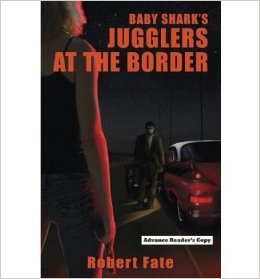 “…in our line of work if we don’t trust our hunches, we’re just shovelin’ regrets to make compost.”
From Jugglers at the Border, by Robert Fate, third in his series about Kristin van Dijk, aka Baby Shark, a young woman who is a pool hustler and private investigator in 1950s Texas. Her partner and mentor Otis Millett delivers this line about being a detective, but it works just as well for writing.
One of the (many) great things about this series is that Fate knows what Texas was like in the pre-feminist ’50s. Kristin, Otis, and their friend Henry, who is Chinese, are all marginal people — like all good detectives they live out on the edge. Unlike Sam Spade, though, who seems to trust no one, they make their own community.
 Pam Summa | author, editor, and creativity coach