P.S. giving credit where due

When I first worked out the way that the shadows in a character inform the story (or the plot, if you have one), I didn’t realize that I had run across the ideas before. I know now that a big part of my inspiration came from a Writer’s Digest blog by Jeff Merke that began with a section on “The Inner Journey” and talked about the character’s “knot”, meaning the flaw or weakness they have to overcome.* I liked this post so much I copied it, but then couldn’t relate the advice to my own process at all. Merke wrote as if he could choose what his characters did, and who they were — he even knew what they needed! — where I tend to find and follow mine. So I “forgot” that the idea of character flaws propelling the story was not mine until I came across the post again, saved in a file. At this point I realize that I’ve read other writing advice about character flaws and the character’s need to change being crucial to story arc. But the idea felt like mine because I had to experience it on my own before it meant anything.

Which maybe says something about writing advice. Or the way some of us learn.

*Jeff Merke must have been a guest editor for Brian Klems’s blog that week. Unfortunately, I haven’t  been able to find Jeff Merke or this particular post to link to. But here’s the blog, called The Writer’s Dig.

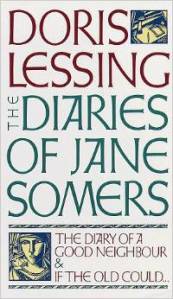
Character and Shadow: Diaries of Jane Somers by Doris Lessing

Jane Somers:LessingThe Diaries of Jane Somers, Doris Lessing (fiction, but initially published as the autobiography of Jane Somers; Lessing’s hilarious account of going undercover as Jane — a ‘new’ author, because Jane’s historical romances didn’t count — is the preface)

The first part is a summing up of about four years. I was not keeping a diary. I wish I had. All I know is that I see everything differently now from how I did while I was living through it. 

My life until Freddie started to die was one thing, afterwards another. Until then I thought of myself as a nice person. Like everyone, just about, that I know. The people I work with, mainly. I know now that I did not ask myself what I was really like, but thought only about how other people judged me.

When Freddie began to be so ill my first idea was: this is unfair. Unfair to me, I thought secretly. I partly knew he was dying, but went on as if he wasn’t. That was not kind. He must have been lonely. I was proud of myself because I went on working through it all, “kept the money coming in”–well, I had to do that, with him not working. But I was thankful I was working because I had an excuse not to be with him in that awfulness.

Lessing shooting from the hip. She presents Jane as someone who lived an unexamined life until her husband died of cancer, when she realized that she had abandoned him emotionally. As the editor of a high-end fashion magazine called Lilith (the one bit of Lessing-type irony in the book), Jane’s life has been based on her image — how she presents herself — and her work at a magazine that also presents images of women. Part of what makes the diary compelling is Jane’s analysis of these images — where they come from, what they mean, how they “work”, and what images of women get left out.

Her insider view of how the magazine and the people in it function is insightful and funny, but the impetus of the book is Jane’s desire to understand what she truly values and act on it — to learn compassion. She begins by spending time with Maudie Fowler, an impoverished, “cantankerous”, ninety-something woman Jane meets in a local drugstore. The first diary is the story of their friendship, its ups and downs of anger and liking, Jane’s difficulties in helping Maudie without being condescending, and Maudie’s life in stories she tells to Jane. Their friendship throws light into the dark places Jane has begun to examine in herself, but this is also a meditation on a culture, and how its unspoken values affect the thoughts of the individual who lives in it. Jane notes that the instinctive reaction of the young electrician she hires to fix the crumbling wiring in Maudie’s kitchen is to wonder: “What is the good of people that old?” and Jane herself asks: “What is the use of Maudie Fowler?” Lessing doesn’t attempt to answer these questions; but because she asks them so baldly the reader is able, through Jane’s diaries, to examine his or her own shadowy, unconscious values.

Character and Shadow: The Vagabond by Colette

DownloadedFileThe Vagabond, Colette (fiction, roman a clef)

Ten thirty. . . . Once again I’m ready too soon. My friend Brague, who helped me when I first began acting in pantomimes, often takes me to task for this in that salty language of his: “You poor boob of an amateur! You’ve always got ants in your pants. If we listened to you we’d be putting on our make-up base at half-past seven in the middle of bolting the hors-d’oeuvre!”

After three years of music-hall and theatre I’m still the same: always ready too soon.

In Colette’s novel based on her life as a music-hall artiste, the protagonist states right away that even after three years she cannot relax about performing, and implies that she may never become a professional but will remain an amateur, an anxious bumbler – not what you might expect from a (notorious) woman who dances half-naked on stage. And because she is ready too early, she has time to think, to conduct a long interrogation with her reflection in the mirror during that “dangerous, lucid hour.” As Renee Nere, Colette takes us behind the scenes of her life (which was public knowledge in Paris in 1910, when she wrote this novel), as well as behind the scenes at the music hall.  Renee, “a woman of letters who has turned out badly”, is an object of gossip and scorn to people she used to know because of the way she makes her living. She is also a single woman with no other way to support herself since she has divorced Taillandy (the character based on her philandering first husband, who held the copyrights to her early, best-selling novels); and she is prone to black moods and anxiety. All this is in the first pages, as is the fact that she still observes her world with a writer’s eye, even though she no longer writes. Her need to observe, as well as what she observes – the nomadic and precarious life of music hall performers, the details of ordinary life transmitted through her senses, and her own inner world as she struggles, first to be more than a “forsaken” woman, and secondly for independence (despite a determined new suitor) – make her story.

But as for the protagonist’s shadow forming the story: although Colette is honest about her narrator’s faults — self-pity, despair, bitterness, and pride, just for starters — in this instance the movement of Renee Nere’s story is less about her faults (which are just there, as normal human failings) and more that she has gone against public opinion, first by divorcing, second by working in the music hall. Part of what Renee’s new suitor offers is a return to respectability. As a married woman she will have the protection of his ‘name’ and no need to work in the music hall. But what keeps her from leaping at the chance is her need for independence, for experiencing the world for herself, without the intermediary of ‘The Man’ to tell her what to feel and think about it. In 1910, this may have been seen as a fault in a woman; and maybe it’s why Erica Jong calls this the first feminist novel.

Shadow and character: The King Must Die by Mary Renault

the king must dieThe King Must Die, Mary Renault (historical fiction)

The Citadel of Troizen, where the Palace stands, was built by giants before anyone remembers. But the Palace was built by my great-grandfather. At sunrise, if you look at it from Kalauria across the strait, the columns glow fire-red and the walls are golden. It shines bright against the dark woods on the mountainside.               Our house is Hellene, sprung from the seed of Ever-Living Zeus. We worship the Sky Gods before Mother Dia and the gods of earth. And we have never mixed our blood with the blood of the Shore People, who had the land before us.                                                                 My grandfather had about fifteen children in his household, when I was born. But his queen and her sons were dead, leaving only my mother born in wedlock. As for my father, it was said in the Palace that I had been fathered by a god. By the time I was five, I had perceived that some people doubted this. But my mother never spoke of it; and I cannot remember a time when I should have cared to ask her.

The life story of Theseus, legendary Greek hero who killed the Minotaur, escaped slavery in Crete, and as king of Athens unified Greece and ushered in a golden age, begins with his pride in worshipping a father-god and his scorn of the goddess-worshipping Shore people. But right alongside this scorn is his respect for and awe of his mother, and she is a priestess of the goddess. The conflict between the older matriarchal societies and the patriarchal ones that conquer them is the context of Theseus’s life; in his case, the political is up close and personal. In this time when the father has begun to take precedence over the mother and being born in wedlock has become a very big deal, Theseus doesn’t know who his father is. His story in this first book is about how he tries to measure up to a mythical, absent man, and to his very-much-present grandfather, whose teaching – that a true king is a sacrifice for his people – informs and sustains Theseus when he goes as part of the tribute to dance in the bull ring in Crete.

Theseus’s surrender to the ideal of the king as a sacrifice sends him to Crete, but ‘surrender’ is temporary — as soon as his seasickness wears off, long before the ship reaches Crete, Theseus takes on his kingship by becoming the leader of the thirteen other captives. From then on he actively uses the ‘masculine’ strengths of intellect, courage, ambition, and athleticism to survive and thrive in the bull ring, until, with Ariadne’s help, he wins free of the Labyrinth and leads his people and the rest of the bull dancers out of Crete.

But his reverence for the Sky gods and their light blinds him; Theseus has trouble with the dark. He needs Ariadne’s help to unravel the secret of the Labyrinth, but when he understands her particular darkness, he deserts her. Throughout his life (see The Bull from the Sea) there is a push-pull between what he perceives as the dark goddesses of earth and the bright gods of the sky; since he can’t accept the dark feminine, he can’t see into the darkness, not in others or in himself, until events have worked themselves out.

Shadow and character: Out of Africa by Isak Dinesen

out of africaOut of Africa, Isak Dinesen (autobiography)

I had a farm in Africa, at the foot of the Ngong Hills. The Equator runs across these highlands, a hundred miles to the North, and the farm lay at an altitude of over six thousand feet. In the day-time you felt that you had got high up, near to the sun, but the early mornings and evenings were limpid and restful, and the nights were cold.

The whole story is in that first sentence. (I got this idea from someone else – probably Judith Thurman’s wonderful biography, Isak Dinesen: The Life of a Storyteller.) The elegiac mode is set up with Dinesen’s use of the past tense, which tells us that she lost her farm; the rest of the paragraph shows how much that farm meant simply by describing the geography and climate. The description is reminiscent of the story of Icarus, who also got high up and near the sun, and had a very long fall (when the wax on his wings melted). Later in the first chapter Dinesen says how she felt in Kenya: Here you are, where you should be. But she adds that the farm was a little too high for growing coffee, their main crop.

Her failure to keep the farm was due to drought, locusts, and falling coffee prices – acts of god. She presents her story as tragedy, herself as a tragic heroine whose flaw is not lack of courage, but may be lack of common sense, or business sense, or a sense of proportion. Like Icarus, she wants what she wants — a heroic life — despite the cost. (She also loves a man who is as impossible to keep as her African farm.) At one point near the end of the book she asks herself what business she had, to set her heart on Africa. She feels she cannot live without the people, the landscape, her whole way of life there, but when coffee prices fall she is forced out, back down from the high places, to lowland Denmark. Dinesen’s sense of personal loss powers her memory of a heroic Africa, that she saw as ‘lost’ to encroaching colonialism.


Shadow and Character: Fifth Business by Robertson Davies

It turned out to be no coincidence that I was unable to write a novel until I had not just taken on board but embraced the idea of the flawed protagonist. (Actually by that point I was only interested in seriously flawed – as bad as me! – protagonists.) To see how this writing theory (which I had read about but ‘forgotten’; nothing teaches like experience) played out, I went through some of my favorite books at random to see if, from the very beginning, the shadows in a main character informed the stories I loved and read over and over again. What follows for the next few days are the first paragraphs of these books, and comments about how character shadows helped make the story.

5118sffVqkLFifth Business (book 1 of The Deptford Trilogy), Robertson Davies

My lifelong involvement with Mrs. Dempster began at 5.58 o’clock p.m. on 27 December 1908, at which time I was ten years and seven months old.         I am able to date the occasion with complete certainty because that afternoon I had been sledding with my lifelong friend and enemy Percy Boyd Staunton, and we had quarreled, because his fine new Christmas sled would not go as fast as my old one.

One of my favorite first pages. The precision of the memory shows how important it is and pulls you right in, because what is the deal between a ten-year old boy and a person named Mrs. Dempster? (You meet her on the second page.)  You immediately get the rivalry between Dunstan Ramsey, who is telling the story, and his friend Boy Staunton. Not a perfect friendship by any means, but a ‘lifelong friend and enemy’. The difference between the two of them is shown in the way they react to the accident that occurs on the next page as a result of their rivalry. This accident (which Ramsey sees as his fault, due to his need to have the last word) and its consequences is the event that drives the trilogy, and the lives of Dunstan Ramsey, soldier, scholar, and hagiographer, the fool-saint Mrs. Dempster, and her son Paul, who becomes the greatest magician in the world. (See World of Wonders for his story.)

Shadow and Character, part II: even The Lord of the Rings

DownloadedFileTo sum up from 9.16 post: As a writer it is hard to figure out how the story works and where it goes when characters are too good. This is because the story happens in the places where the characters have to deal with something – their own issues, what they’ve made of their life, or what they’re going to do about a situation or another person — and if characters have everything all worked out, they have nothing to deal with.

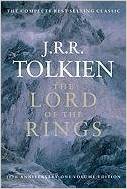
Of course their difficulties could come from outside themselves –  from an evil sorcerer, or a corrupt society’s injustice and cruelty, or bad luck, or illness, or war, or a natural disaster. Then the character’s interaction with that shadow, that darkness, would give the narrative a direction. But even in the Lord of the Rings, where Sauron and his orcs and trolls and Black Riders are totally evil, and could supply all the narrative movement – since they are so obviously worth fighting against – what makes the story move in such a way that you must keep reading is that the good guys are not perfect, but flawed. Frodo starts out by dithering around the Shire, saying goodbye to his favorite places and waxing nostalgic instead of hitting the road and getting on with his quest, while Gandalf gets the wool pulled over his eyes by a fellow wizard who has gone to the bad but is Gandalf’s superior, and puts his faith “in a fat man who only remembers his name because people shout it at him all day” to send the crucial message that would get Frodo on the road. Too impatient to find a better messenger, Gandalf drops the ball, very nearly catastrophically. He gets taken prisoner and gives their enemies from Mordor a head start. When Aragorn shows up alone to help the hobbits at the Prancing Pony, he appears scruffy, secretive, and threatening – he is not a pretty face, and has so little charm and plausibility that the hobbits initially mistake him for one of the bad guys (although Tolkien gives the reader enough clues to suspect otherwise). And the hobbits themselves are so reliant on bourgeois conventions of appearance that they nearly send away their last hope of help. In the midst of this mess created by less-than-perfect protagonists, the trilogy takes off.

Shadow and Character, part I: why too good doesn’t work

Shadowgraphy-Art-3One of the main things I had to learn to write fiction was how to let the characters become themselves. This meant they had to be imperfect in their own ways, not necessarily in ways that I found acceptable. The problem with making them ‘acceptable’ and then ordering them around was that I got stuck every time they came to a dead-end in the story, which they did with increasing frequency the more I tried to ‘better’ them; I suppose they were trying to tell me something.

The dead ends in the story were my other big problem. Sometimes I got the ghost of a plot; but a ghost it stubbornly remained as long as I held the characters to an ideal of behavior. As it turned out, these two issues were related.

Learning to follow the characters took me years, and probably would have been easier if I’d realized that protagonists need to be flawed, as flawed as ordinary people, even if they’re extraordinary.

When I began to allow them freedom of movement, the characters stretched, grew wings and spread them – and then they flew, or crashed and burned, but at least they got to act on their own – and I finally saw that it is how the character develops that drives the story, and that their development is related to the character’s flaws and peculiarities as well as their sterling qualities. A character without any shadows, without any darkness or flaws, is flat. It’s like what happens with party talk – hard to know someone if you only see their party face. Which is exactly what happened with my own early stories. Since my own life was out of control and messy, I wanted to create an ideal self and her wonderful, orderly life on the page. (She would have amazing bone structure, a flat stomach, and she would never eat a whole bag of molasses cookies in one sitting. She would be so artistically talented and inspired that she would spend her days making art and selling it — through a gallery! — instead of feeling like a wannabe and doing secretarial shit-work to survive. Plus she would live in a top floor ‘flat’ with a bird’s eye view of rooftops and a body of water, in some fine city that was rainy and interesting, like London. Plus, if she liked a guy, he would like her too. He would think, as I did, that she was stellar.) But despite all the words I lavished on this character and her fulfilling, productive, important life…she had no story. All I could see was her perfect, frozen image, and no matter what kind of plot I dreamed up for her to perform in, she never danced. That’s the trouble with perfection; there’s no need for dancing, there’s no need for a story at all.