the Rights of Readers

flying-books

drawing of winged books is from a site called decorated school

In nearly 60 years of reading, I have come up with a few ‘rights’ to counteract the unconscious rules I had about how and what to read. My mother and grandmother were English teachers; but I think many of us have these rules stuck in our heads somewhere…we let other people define what is ‘good’ to read and what isn’t, whether we’re going along with consensus or rebelling against it (as I used to do with best sellers — assumed they were all crap.) Along with the ‘rights’, which are really suggestions for how to enjoy what you read, I’ve included some examples.

If you’re reading on your own, for yourself, you don’t have to read anything that doesn’t interest you. (There’s a great Mark Twain quote about this; I’ll bet you already know it.*)

Just because you started a book doesn’t mean you have to finish it. If you want to know what happens but hate reading it, you can skim it or skip to the end. (Many people know this; but I didn’t until my mid-50s, which is why I include it here.)

Just because a best friend/lover/child/writer you respect/”educated people”/someone who writes for a magazine or the NY Times/etc. likes a book, doesn’t mean you have to. That’s why there’s more than one writer in the world, and more than one story, and more than one book.

Just because you were forced to read one book by an author that was called a ‘classic’ and that you hated, doesn’t mean you can’t read another book by that same author now and enjoy it. (Silas Marner by George Eliot was sooooo bad in high school English class; but five years later, Middlemarch became one of my reread-it-every-year books. Also happened with Doris Lessing — hated The Golden Notebook, years later fell in love with The Four-gated City.)

Just because the bookstore or library has shelved the book with children’s books or young adult (adolescent) books, doesn’t mean you can’t read it if you’re older. (I didn’t discover E. Nesbit and the Bastables until my twenties, and that’s the tip of the iceberg.)

If all your reading buddies are pushing a certain author or book at you, saying you will “love” this author’s stuff, and you can’t get into it, set it aside and try again next year. If the time is right, the book will speak to you, and when it does you’ll know right away. Or it won’t speak to you ever. That’s okay, too. (This happened with Robertson Davies — took me nearly a decade to be in the right mindset to read what became some all-time favorite books.)

Just because a book is a best-seller doesn’t mean it’s a good book or a bad book. It can be either. (My first foray into best sellers was Women Who Run with the Wolves by Clarissa Pinkola Estes. Although I didn’t like the foreword, the rest of the book was wonderful, especially the different slant she had on the same stories that Marie Louise von Franz [hot-shot Jungian] had examined in The Feminine in Fairytales.)

Just because a book has gone out of print doesn’t mean it’s a bad book. (Selma Lagerlof’s Liliecrona’s House, just for instance, which finally came out from a publisher called Forgotten Books. Also Cam Hubert’s Dreamspeaker, R.A. MacAvoy’s The Grey Horse, Francine Prose’s Hungry Hearts. All of these verge on speculative fiction-fairytale…are not ‘realist’ books. There are a lot of good out-of-print books out there; these are off the top of my head.)

Just because a book is self-published doesn’t mean it’s a bad book. Think Anais Nin, Henry Miller, Virginia Woolf. And Dorothy Bryant’s science fiction classic, The Kin of Ata are Waiting for You.

Fear no genre.

*From Mark Twain: “A classic is something everyone wants to have read, and no one wants to read.”

On Children’s Literature, Alison Lurie

Alison Lurie, Don’t Tell the Grownups: Subversive Children’s Literature
from the foreword:

But I think we should also take children’s literature seriously because it is sometimes subversive: because its values are not always those of the conventional adult world. Of course, in a sense much great literature is subversive, since its very existence implies that what matters is art, imagination, and truth. In what we call the real world, on the other hand, what usually counts is money, power, and public success.

The great subversive works of children’s literature suggest that there are other views of human life besides those of the shopping mall and the corporation. They mock current assumptions and express the imaginative, unconventional, noncommercial view of the world in its simplest and purest form. They appeal to the imaginative, questioning, rebellious child within all of us, renew our instinctive energy, and act as a force for change. This is why such literature is worthy of our attention and will endure long after more conventional tales have been forgotten.

Imagining hope, the healers

There’s a great line somewhere in the book The Spirit Catches You and You Fall Down by Anne Fadiman, where the author is talking to a Hmong man about what he looks for in a doctor, and the man says he wants someone who will listen to him and care about him. That is what I found with each of these healers, who worked to alleviate or clear up chronic health problems, as well as helping me in times of crisis. None of them has a 100% success rate, but all of them have healed me of health problems that allopathic doctors had treated without success. Since most of my life has been spent in New England, that’s where they are – except for Dr. Kim, who has moved to Oklahoma City. If you live nearby or plan to get your kicks on Route 66, you can visit Dr. Kim. Dr. Moskowitz and Susan Kippen are in the Boston and South Shore area, and both work long distance (over the phone).

Susan Kippen, at South Shore Natural Healing, does energy work, including reiki, cranial-sacral, tapping, hypnotherapy, chakra clearing, etc., and even shamanic work, although she doesn’t call it that. Her ‘natural healing’ includes a kind of spiritual counseling. To give only one example of her superpowers: she was able to rid me of a recurring nightmare in about 15 minutes, by finding the reason for it, and removing it. (Yup.) The icing on the cake is that Susan is a very down-to-earth person. She is also funny, warm, smart, keeps her fees low, and is good with children as well as adults. (Actually, that sentence applies to all three of these healers.)

Dr. Richard Moskowitz, in Watertown, MA, was one of the forerunners of the homeopathic revival in New England back in the day (1970s?). He is also an MD, and if what he prescribes doesn’t work, he’ll try another remedy, and if it still doesn’t work (this is rare), suggest another kind of alternative (or not) medicine. He has no axe to grind. At the intake session, which takes 1½ or 2 hours, he asks questions, including what frightens you, what makes you cry, what makes you feel better when you’re ill, and so on and so forth, to focus in on your homeopathic type. Once he’s got that, he can work with you to clear up chronic conditions. He can also prescribe homeopathic remedies for non-chronic illness over the phone. Twice, now, he’s been able to cure me long distance of dread cold-flu type diseases I got after a cross-country plane trip. Considering how shitty I felt, and how quickly they worked (between 3 and 8 hours), these homeopathic cold/flu remedies felt like miracle cures.

Dr. Myung Chill Kim, now in Oklahoma City, uses acupuncture in conjunction with Chinese herbal remedies; he also teaches Tai Chi and Qi Gong meditation and is a martial artist. During the year I worked with him on his book about cancer I was able to see him for treatment every week, and during that time I had no insomnia. He also got me through the last time I quit smoking – talked me down after I coughed up blood, prescribed a Chinese herbal remedy that stopped that symptom immediately, and gave acupuncture treatments to help with addiction and fear.

All three of these people listen, they care, and they cure.

*The book is about Hmong in the US, focusing on one family and their epileptic child, and the lack of understanding between the Hmong and the US medical system that led to disaster.

overheard

at the local supermarket. The male cashier was talking to the bagger, telling her about a friend who had lied to someone (a girlfriend? wife?), and then he had to keep lying, and trying to remember all his lies to keep the story straight, when he should have just told the truth and dealt with the consequences. I asked the cashier, “So did he get caught?” The cashier got a small smile and said, yes, he did get caught. “Satisfying,” I said. “You know, justice.” His smile got wider. He said: “You gotta roll with the iron fist.”

Watching the detective: Veronica Mars

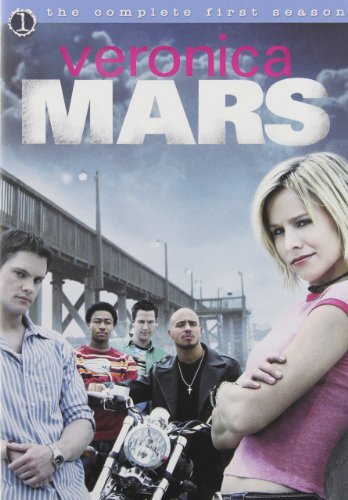
91l7YBEyqUL._SY500_Long story short (is this even possible?) I had been on hiatus from TV (only using it as a monitor for movies on VCR or DVD, never seeing an ad) for over a decade when I broke my ankle and my friend Emily brought me Season 1 of Veronica Mars. To ease the boredom of sitting around with my foot elevated I was ready to try it, hoping it would be even half as good as The Rockford Files (especially the episodes Juanita Bartlett wrote).

Veronica Mars blew me away. Kristen Bell’s Ms. Mars was intense, funny, and riveting from the first frame. That deadpan voiceover, more Sam Spade than Nancy Drew, and Rob Thomas et al.’s writing (for et al., especially see Diane Ruggiero‘s episodes) — Veronica saying, for instance: “You want to know how I lost my virginity? So do I.” (She was raped after someone — who? — put Rohypnol in her drink at a party.) What a line! What a teenage girl detective! What an ensemble cast! The other characters, major and minor, whether good guys/girls or raving assholes, made sense and worked as people (maybe in part because Rob Thomas was a high school teacher for awhile and knew whereof he wrote). The structure of the show was similar to Prime Suspect in that it had an overarching mystery — who really killed Veronica’s best friend Lilly Kane? — that Veronica and her detective father Keith Mars tried to solve throughout the whole season; this added a ground note to the smaller puzzles Veronica solved each week. Much like DCI Tennison in Prime Suspect, Veronica Mars solved her crimes through intelligence, courage, tenacity, and deviousness, and kept going despite being up against the most powerful people in town.

Also like DCI Tennison, Veronica was a lonely heroine, without much support from the people around her. In Prime Suspect 1 Tennison had to deal with outright as well as passive insubordination from the misogynists on her team who didn’t want to take orders from a woman; Veronica lost her friends and her status at Neptune high school (and went from in-crowd to outcast) because of her belief in her father, her grief, and her need to find justice for her murdered friend Lilly.

Watching the detective: DCI Jane Tennison

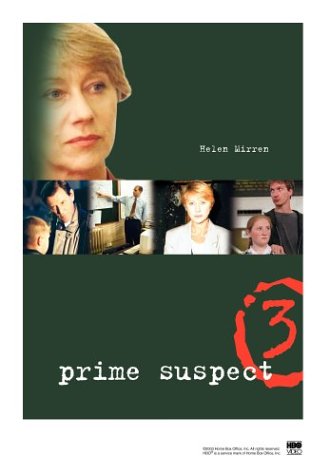
41888639DELI’m not much of a TV watcher. I haven’t watched actual TV at home since the early nineties, when the writing of Lynda La Plante‘s Prime Suspect, starring Helen Mirren, was taken over by someone else. In La Plante’s stories of good versus evil (Prime Suspect 1-3) good triumphed despite (nearly) insurmountable odds, mostly because of DCI Jane Tennison’s intelligence, tenacity, courage, and deviousness. She was definitely flawed — driven and insensitive and unforgiving — but she was a flawed hera, who was not afraid to confront power and privilege to catch the bad guys, or to look evil in the face and stare it down.

But La Plante’s world (and the characters she created) was handed off to some other writer (or writers; I never looked them up), and her dark vision of good against evil with the protagonist as a lonely force for good gave way to an even darker vision, where good and evil were ambiguous and the detective could no longer tell the difference between them (although I could; which made me distrust Tennison’s brains and intuition for the first time). Ambiguity can make for a strong, staring-into-the-dark-all-night drama (if you want insomnia, see Gone Baby Gone), but not when you sense the author manipulating every scene, so that story and characters become just so much grist for the mill, grinding out a statement about the brutality and pointlessness of life.


Imagining hope…watching the detective

In one of her Peter Wimsey novels Dorothy Sayers has someone remark that detective stories are extremely moral despite the murder and mayhem, because good triumphs over evil when the case is solved and the murderer brought to justice. In this way detective stories are also hopeful, because they imagine a world in which good does triumph, and the wicked get punished, or at least halted in their forward momentum and kept from doing more harm.

91OrGjavOYL._SL1500_Sayers was writing from the 1920s into the 1940s, and detective stories have changed a lot (and even then Dashiell Hammett was writing fiction based on his own experiences as a Pinkerton’s detective, for one thing; Patricia Highsmith’s Mr. Ripley happened, for another), but the theory still holds. Even the recent (2014) season 1 of True Detective, which is about as noir as you can get, has that ground note of hopefulness, without which the story would be unbearable.* As Nic Pizzolatto, the writer/creator of the show, said in the DVD interview, he wanted that hope; he wanted to show that “optimism is no more of an illusion than pessimism.”

*A real life illustration of how a hopeful story can make something bearable: a librarian friend told me about a patron who took out DVDs of Law and Order: The Special Victims Unit because of her work — in a special victims unit. The crimes she investigated were so much worse than those on the TV show, and often unresolved even when the criminals were known, that watching the show was a way to restore her hope, and keep on keeping on.

Imagining hope, the future Somerville

(here’s the last bit of my imagining hope for the future of Somerville, from Tim Devin’s zine The History of Somerville, 2010-2100. A lot of what I imagined came from Starhawk’s futuristic fantasy, The Fifth Sacred Thing — in particular, the streets being dug up and planted, green energy, and the waterways that were asphalted over and forced underground set free again. Just so you know, The Fifth Sacred Thing is soon? to be an indie film. Click on the blue sentence to find out more.)

brd_PassPig_Brooks

rebirth of the passenger pigeons

{notes from the future}

People are so laid back! Nobody walks around talking on a cell phone and clutching a commuter cup of coffee. They laze in the sun, or weed the gardens, or do Tai Chi, or dance and play music, or read, or write, or eat and drink their coffee at little tables on the sidewalk patios, or sit with their own picnics by the creeks and streams, or on benches and stones in the parks. They’re paying attention to the people they’re with, or to what they’re doing, or just watching the world go by. They make eye contact with strangers. They say hello and talk to each other. They seem to be enjoying themselves.

People are smaller than the people in my time – shorter, smaller-boned, but healthier looking – plump instead of fat, slim instead of gaunt, and a lot of in-between. They don’t all dress the same – it’s not business suits, or that other suit, jeans and a t-shirt. There’s a tall (nearly six feet is tall) person of indeterminate sex striding down Holland Street wearing floaty pink robes and headscarf, just for instance. There are people in monochrome colors, and ones in tatterdemalion; there are robes and skirts and trousers, shirts and vests and tunics; but everything is looser and more comfortable looking. Even the shoes look comfy, no toe-pinchers here, and some people are barefoot.

6a00d8341bf7f753ef00e55395884a8833-800wiI take off my own shoes to walk in the grass. The air smells sweet, and the light is different – less brown, more blue. Is that because I’m dreaming? But as the sun sets and a million stars come out, I see that the Milky Way is visible once more in the night sky, and realize, without the bird telling me, that it is lack of pollution that has changed the smell of the air and the color of the light.

The night market is opening. I stand at its entrance, on the old bike path behind the Somerville Theatre. The line of overarching trees is still here, but so tall! It seems more like an endless forest, this place, than a line of trees. The night market is lit by humming globes of light, floating in the air. They move as if they’re alive. What are they?

The bird answers in a word or series of words that is so unfamiliar I can’t hear it. I am about to ask for an explanation in plain English when I smell food and see a cart where two people are busy grilling fish and vegetables. A juice cart is close by, with heaped piles of apricots and plums and tiny strawberries. I am suddenly ravenous with hunger and parched with thirst. But what can I use for money?

It’s free tonight, the bird tells me. You can eat and drink whatever you want!

I take a step forward, wondering what to try first. That’s when I am pulled back to Now. I returned to this particular once-upon-a-time empty handed, with nothing to eat or drink, and nothing to show for my journey except these notes on paper.

Imagining hope, the future Somerville

(continuation of my hopeful imagining for Tim Devin’s zine, The History of Somerville, 2010-2100)

shadesofpurpleandgreen

from A Tree Grower’s Diary, see link below

In the middle of Davis square is a giant European purple beech, about fifteen feet around. It’s a wishing tree, and it’s hung with offerings – bells and folded colored paper, tiny bottles, birdseed on sticks. Underneath the tree there is always a storyteller, and there is always a dreamspeaker. Other parts of the square are devoted to music and dancing, and moving or not meditation, and outdoor schools. Apparently all the squares in Somerville – and what used to be Boston – are like this now.

The Davis Square T station is still here, only it’s running green on a combo of wind and solar energy. There’s a monorail system overhead, zipping around as silent as a dragonfly, and following ley lines. I see horses and donkeys – Tufts field has become pastureland – and even more bicycles and bicycle-carts – the bike path that used to end at Cedar Street now runs all the way to ocean in the east, and to New-York-state-that-was in the west.

220px-Tiny_house,_PortlandMeanwhile the parking lots in Davis Square have become live-in parks, dotted at random with small to medium-sized cottages – each one different, but most have grass or flowers on the roof – that turn out to be no-income housing, for those people who used to be called homeless. Now they live among communally owned and tended orchards and gardens, in their own homes, each stamped with the personality of its owner – one is nearly invisible in the bamboo grove around it, another is painted in blue, pink, and green stripes, another seems made entirely of windows in different shapes and sizes, each one curtained in so many colors the house looks like a patchwork quilt.

There are a LOT more birds – even big ones like eagles and cranes, and is that a flock of passenger pigeons?* – and fewer people overall, but way more children out and about, playing in the grassy spaces where the traffic used to be. There isn’t anything resembling a skyscraper around here, not even downtown; my bird-guide tells me they went the way of the woolly mammoth and the meter maids. And the big nursing home on College Avenue is part-school, part elder home. Apprenticeship is once again the mode, so there’s less ‘retirement’, and then there’s always those elders who are good with kids, and kids who need them.

Across the street and up a block, the West branch library is now open 24/7, with plenty of librarians for each shift, and no shift lasting longer than 4 hours. It seems like a joke in poor taste that the library was once closed most evenings, every night, and all weekend, and understaffed besides. In this day and age it has been completely restored inside (with an elevator!), and has trees out front and flowers on the roof, like a crown.

*Somebody else was imagining hope, too. Click on the passenger pigeon link above to see how scientists are working to bring back the passenger pigeons, using DNA from corpses of the extinct birds.

On a sadder note, here’s the story of a European purple beech.

Imagining hope, the future Somerville

566647857_8918df67abHere’s my own foray into imagining hope like crazy, which was published in Tim Devin‘s zine, The History of Somerville, 2010-2100. The ‘history’ ranges from wildly idealistic (I wasn’t the only one to predict the end of fossil fuels, solar collectors on every roof, and crops growing in the streets) to dead serious (flooding from climate change, collapse of the world economy, no more harvestable seafood) to deadpan (a dog becomes mayor; the Somerville Arts Council accepts its first artificially intelligent board member, Ip/So; Hurricane Igor decimates the town), as is the way with the folk of the ville.

My own prediction was for 2148 — outside the timeline. I wasn’t that optimistic. But what the hey, hope is hope.

Notes from a time traveler. Written on plain lined paper, found in a decaying leather suitcase in a closet in West Somerville around 1999.

So I accepted the invitation to time-travel to Somerville in 2148. The invitation came from a little bird – a grey bird, like a mockingbird, only smaller. (And then, he spoke to me, in English, inside my head, so I knew he wasn’t a regular mockingbird.) He says he will be my travel guide.

As we come flying in over the city, I am dazzled by the rooftops. They are covered with solar collectors of all shapes and sizes. The ones like mobiles wink and glitter when the breeze stirs them. The rooftops that happen to be flat are green with gardens – grape arbors and climbing roses, vegetables and herbs, even trees. As we circle Davis Square, I can see that the rooftops have hanging gardens, and even open meadows of grass and wildflowers.

No one’s using fossil fuels anymore, the bird says. It’s changed everything.

He adds that there’s no advertising anymore, either – no commercials, no newsprint advertisers dumped in mailboxes, no flyers, no print catalogues, no billboards, no focus groups, no glossy magazines, no spam, no telemarketers, no pop-ups. How did that happen? All the bird will say is that the word yuppie is no longer in use, anymore than the words homeless or disadvantaged.

Many of the roads have been dug up and planted. The houses in rows are still there, but now the rows tend to curve, and from above the neighborhoods – like little tribal enclaves – are obvious, even though they run into each other. Streams knit and divide the neighborhoods – the bird says the streams are all the water that used to run free above ground, released from their long darkness, as well as irrigation creeks, running off every which way, and glinting with the quartz in them.

Highland Avenue is planted as far as I can see with spirals of corn, and tucked in next to the corn are all kinds of plants, that the bird says are vegetables and flowers. Around the spirals are greenhouses for vegetables and fruit;* but the greenhouses are in the process of being dismantled for the summer, as the orchards and gardens come in.

*Here’s a link to an organic urban farm in Detroit, MI called Earthworks. Earthworks has greenhouses as part of the farm; it’s connected to a soup kitchen, WIC programs, youth programs, etc. The farm was started in 1997, part of the movement in Detroit to reclaim and use vacant lots to grow food, in anticipation of the dearth of fossil fuels and subsequent lack of food (20% of fossil fuel use is for transporting food). Follow the links on their site for media coverage of Earthworks, as well as more on urban gardening in other cities.